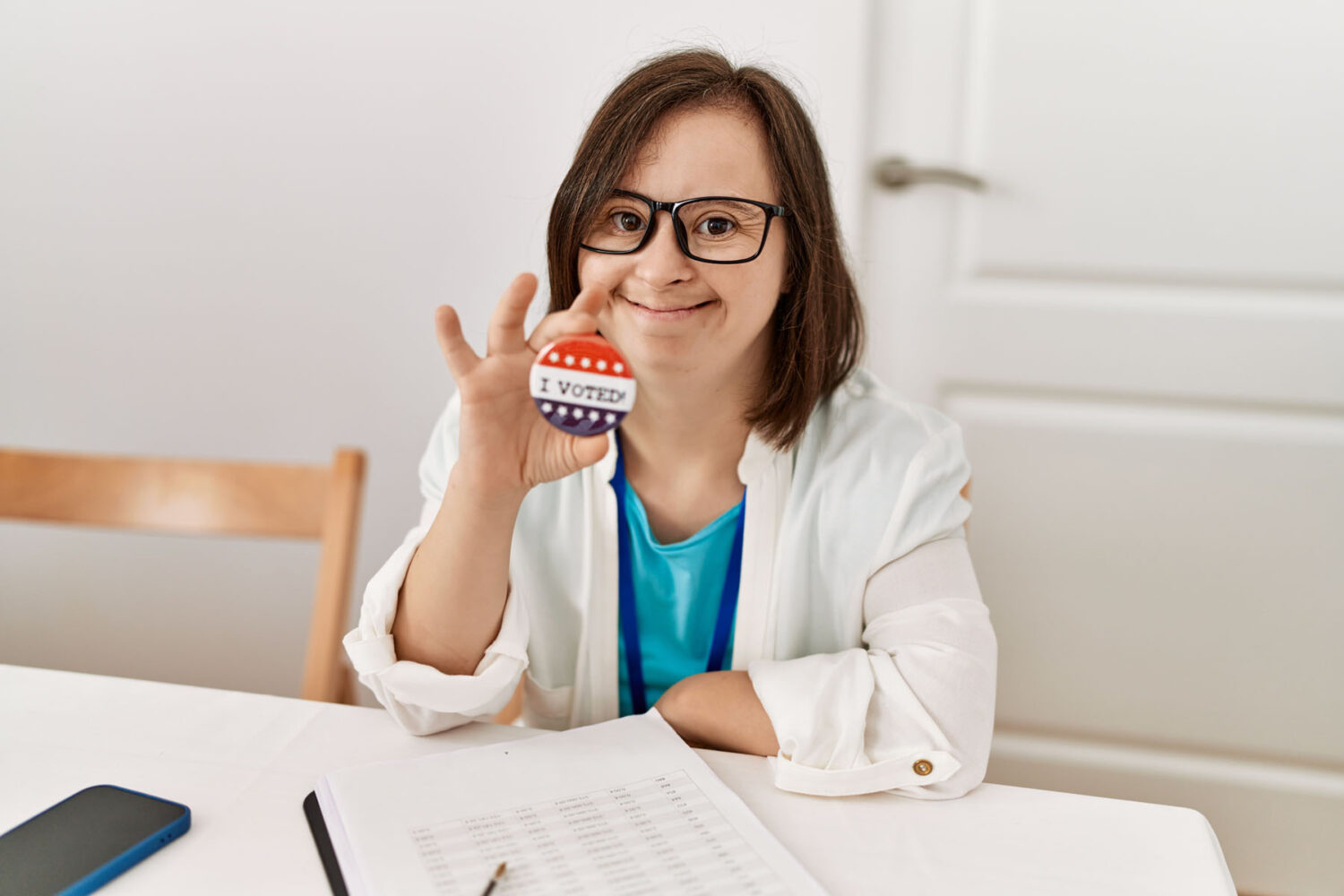
Repost: Disability is everywhere. Representation is not.
Posted on: Jan 30, 2026
This article was written by Christa Gabriel, director of public policy at Disability Rights Montana. It was originally published in the Daily Montanan on January 21, 2026.
It’s a big election year. People are already declaring candidacy for office, and the political ads will start ramping up soon. With all the time and money spent to convince voters who to support, I worry that one major issue will be overlooked – disability. There isn’t a clear playbook being handed down by either of the two major parties about how to address the many challenges and opportunities people with disabilities face and most politicians are seemingly uncomfortable talking about their own disabilities.
Disability is just a word to describe having a condition that changes how you complete a task, it’s not a weakness or a flaw. Here in Montana, more than one in four people live with a disability. Yet despite how common disability is, it is still rarely reflected in business, community, or political leadership. National figures suggest that only about 10% of politicians and organizational leaders publicly identify as having a disability. That raises an important question: Why isn’t the largest minority community more openly represented among our lawmakers?
Before we can dig into that, it’s worth understanding why this matters.
People with disabilities are affected by every policy decision and more than half of all policy decisions directly affect our disabilities. From health care and education to housing, transportation, employment, and voting access, disability intersects with nearly every area of public life. And yet, political candidates rarely run on disability-specific issues or speak openly about disability as part of their identity.
Within the disability community, we often say, “Nothing about us, without us.”
This has been thought to mean that people with lived experience should be included and have a seat at the table when decisions are made that affect us. We are ready for more than politicians simply doing things to us, or for us, we want policies built with us. We are looking for true representation. We want leadership that understands disability not just in theory, but in real life experience and impact.
Voters fully appreciate how powerful shared experience is in leadership. Rural communities support rural candidates. Veterans trust veteran leaders. Parents connect with leaders who understand family life. Shared experience builds trust, accountability, and better decision-making. The same is true for people with disabilities.
Disability is more common and diverse than most people realize. It includes physical, mental, or neurological conditions that affect your life. This can mean chronic illness, autoimmune conditions, mental health challenges, ADHD, hearing loss, cancer, substance use disorders, or physical impairments. Disabilities can impact any number of everyday things like breathing, walking, seeing, hearing, speaking, sleeping, caring for ourselves, and working. Some disabilities are present at birth, while others develop through illness, injury, or aging.
Simply put, disability is any physical or mental condition that makes it difficult or changes how you navigate everyday tasks to live your life.
And despite how natural and common place this is, many leaders who live with these conditions remain silent about them.
I encourage leaders with disabilities to identify themselves, not for attention, but for impact. When leaders are open about their disability, they create space for others to lead with pride. They show young people, newly disabled individuals, and aging community members that leadership is attainable, and they can have a part in the decisions that are being made about their lives.
The decision not to disclose a disability is often rooted in fear of stigma and the risk of judgment from voters. It’s time to look beyond that and it’s time to embrace disability as a common human experience. An experience that provides great insight, adaptability, creativity, and perspective which are exactly the qualities we should look for in our political leaders.
We need more representation
Disability is a shared human experience that connects millions of people across every community from every walk of life. When candidates run openly on disability issues and when leaders are honest about their own disabilities, they do more than represent a community. They empower and encourage engagement, normalize inclusion, challenge old stigmas, and help shape policies that reflect real lives.
Disability Rights Montana is nonpartisan, and our goal is to elevate the voices of people with disabilities and create space to discuss the issues that matter most to our community. As we enter this election season, the disability community is looking to identify disability champions. Candidates should feel encouraged to share their lived experiences which have shaped their values across physical, sensory, cognitive, and health differences even if they have never previously thought of themselves as part of the disability community.
If you have a disability or have a family member with a disability and are currently in office or are thinking about running for office, I assure you that the disability community wants to hear from you, we want to hear how your experiences with disabilities give you the insight and moral leadership we need from the policy makers who represent us.