
Know Your Rights While Traveling With a Disability This Season
Posted on: Nov 20, 2026
Key Takeaways
The Air Carrier Access Act makes it illegal for airlines to discriminate against passengers because of a disability on any flight to, from, or within the US.
You can request airport wheelchair assistance to board, deplane, or connect between flights, and airlines must provide it in a safe and dignified manner (at no charge).
You're generally not required to give advance notice for most accommodations, though calling ahead helps airline staff prepare, and a few specific services allow airlines to require up to 48 hours' notice.
At the security checkpoint, you can stay seated in your wheelchair, request a same-gender pat-down or a private screening, and carry medically necessary liquids past the usual 3.4-ounce limit.
If your wheelchair is damaged in transit, document it at the arrival gate before you leave, report it to the airline's Complaints Resolution Official, and know the airline is responsible for repairing or replacing it.
Ability Montana's advocacy program and information and referral services can help you know and defend your rights while travelling.
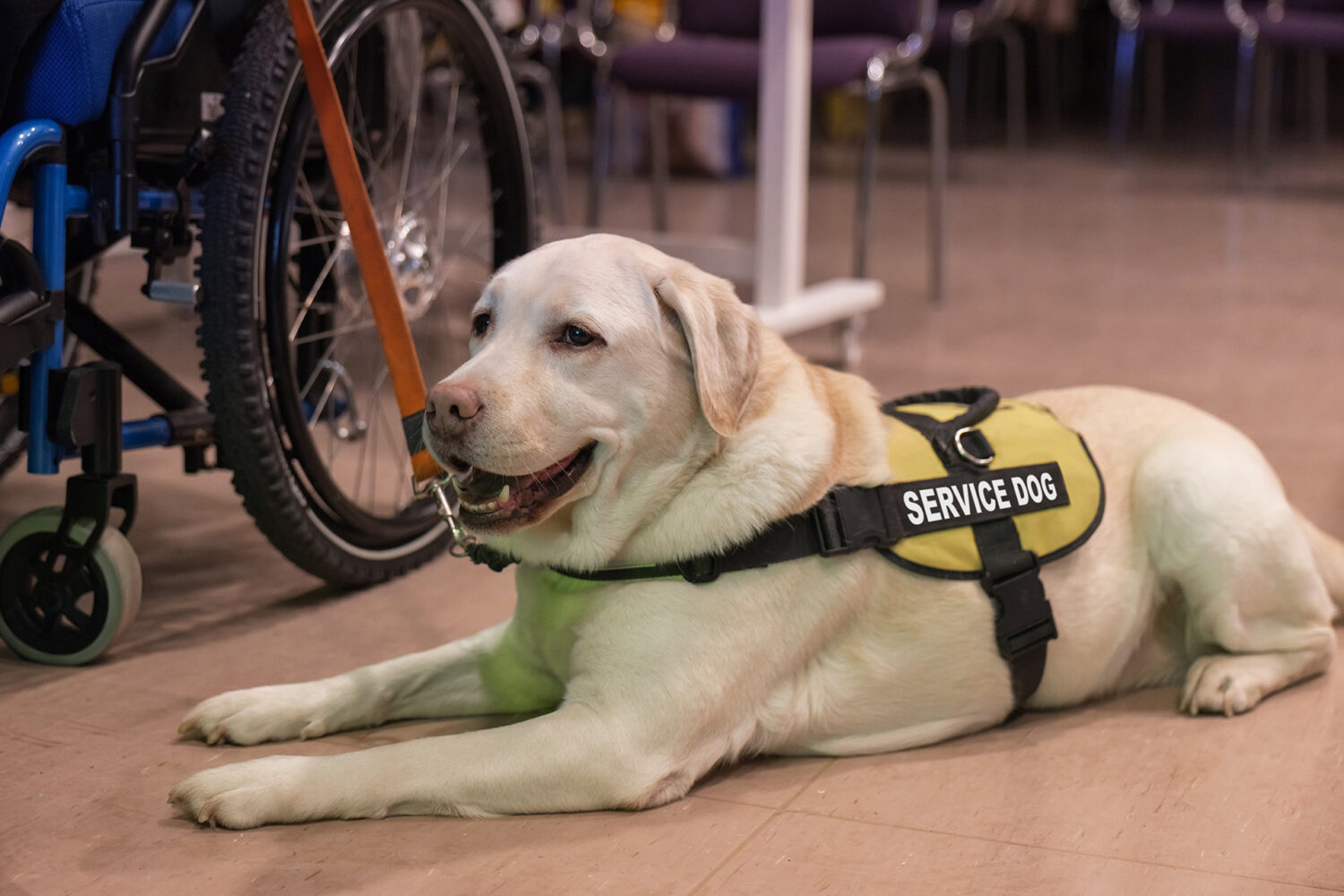
The holidays pull people onto planes, into rental cars, and through unfamiliar cities more than any other stretch of the year. For anyone traveling with a disability, that mix of crowded terminals, tight connections, and new places can turn an exciting trip into a stressful one.
Knowing your rights ahead of time changes that by putting you in the position to ask for what you're owed.
This guide focuses mainly on physical disabilities and air travel, since airports are where most people run into the biggest access questions. Disabilities can be mental or physical, visible or not, and much of what follows applies broadly. The goal is the same either way: a trip where you feel prepared, comfortable, and in control.
The Law on Your Side: The Air Carrier Access Act
The single most useful thing to understand before you fly is the Air Carrier Access Act, or ACAA. It's a federal law that makes it illegal for airlines to discriminate against passengers because of their disability, and it applies to all flights to, from, or within the United States.
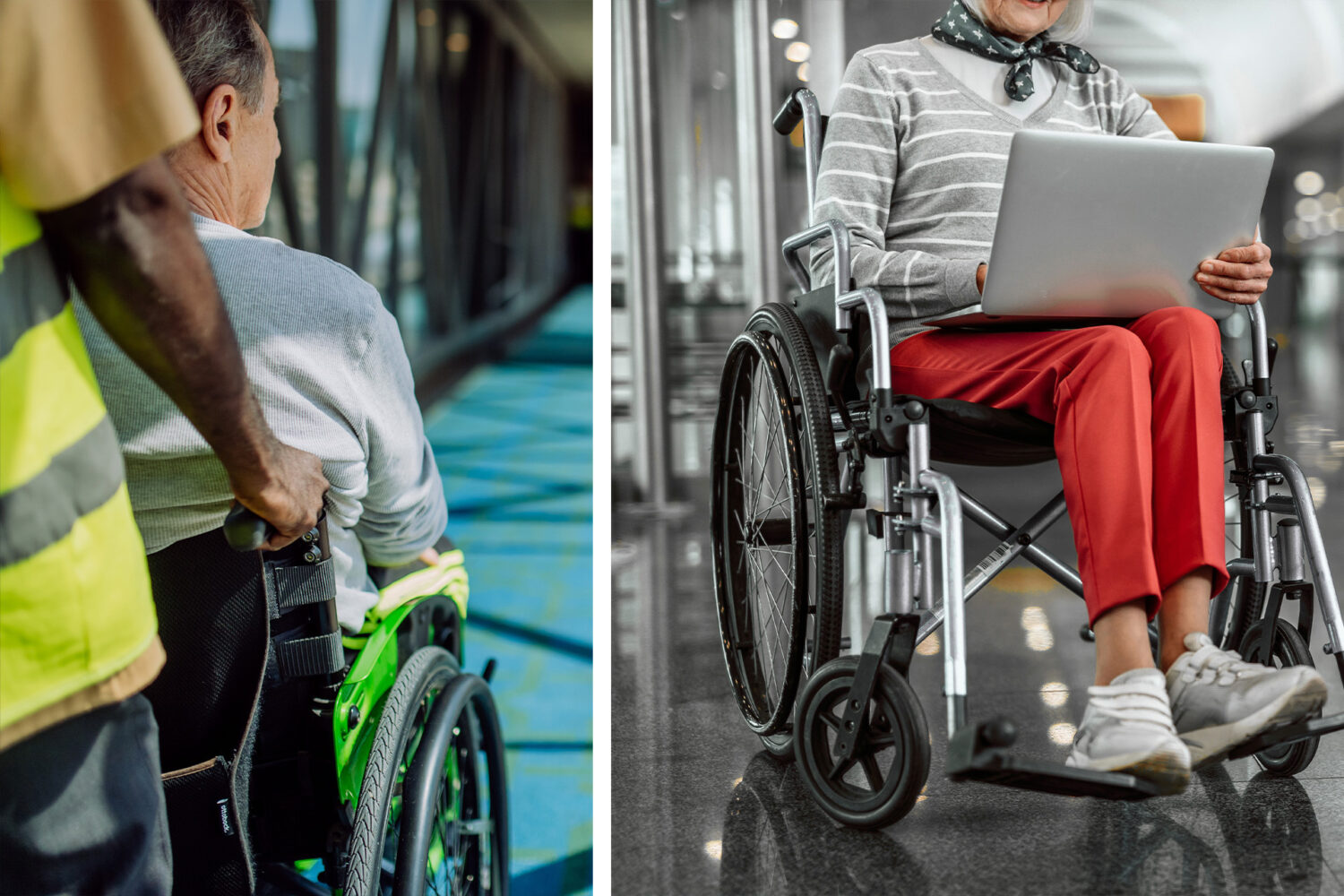
Under the ACAA, airlines have to provide a range of disability-related assistance. That includes prompt airport wheelchair assistance to board, deplane, or connect to another flight, seating accommodations that meet your disability-related needs, and help loading and stowing your assistive devices.
As of a 2024 update to the rules, this assistance must be delivered in a safe and dignified manner, and "dignified" carries a specific meaning: assistance that respects your independence, autonomy, and privacy. In practice, that includes staff transferring you without removing your clothing, not delaying your access to a restroom, and speaking directly to you rather than to a companion.
If you want to read the details for yourself, the DOT's Traveling with a Disability page lays it out, and some travelers even print the Airline Passengers with Disabilities Bill of Rights to carry with them for reference.
Requesting Airport Wheelchair Assistance and Other Accommodations
Here is a point that surprises many first-time flyers: you generally aren't required to provide advance notice to receive most disability-related accommodations. You can show up and ask. That said, calling your airline ahead of time helps staff arrange airport wheelchair assistance, seating, and device stowage correctly and on time, so it's worth doing even when it isn't required.
There are a handful of exceptions where an airline can require up to 48 hours' notice and check-in at least an hour early. These cover more involved services like hooking up a respirator to the aircraft's power supply, carrying medical oxygen onboard, transporting a powered wheelchair on a smaller aircraft, or accommodating a group of ten or more travelers with disabilities. If any of those apply to you, make the call early.
A few things to do when you reach out:
Repeat your accessibility needs to every airline involved if your trip has connections.
Ask whether your plane has an accessible lavatory and where the priority wheelchair space is.
Request to pre-board, which is how you secure the opportunity to stow a folding manual wheelchair in the cabin on larger aircraft.
If you use a powered wheelchair, ask about the aircraft type and cargo door size before you book. Travelers have been stranded overnight because a chair wouldn't fit the cargo hold on a particular plane.
One reassuring point worth stating plainly: this assistance is free. It's unlawful for airlines to charge you for wheelchair help, boarding assistance, or any accommodation required under the ACAA. If you use a service animal, that animal also flies at no extra charge. When you book, you can ask the airline to enter a Special Service Request, or SSR code, on your reservation so your needs travel with your record from the start.
What to Expect at the Security Checkpoint
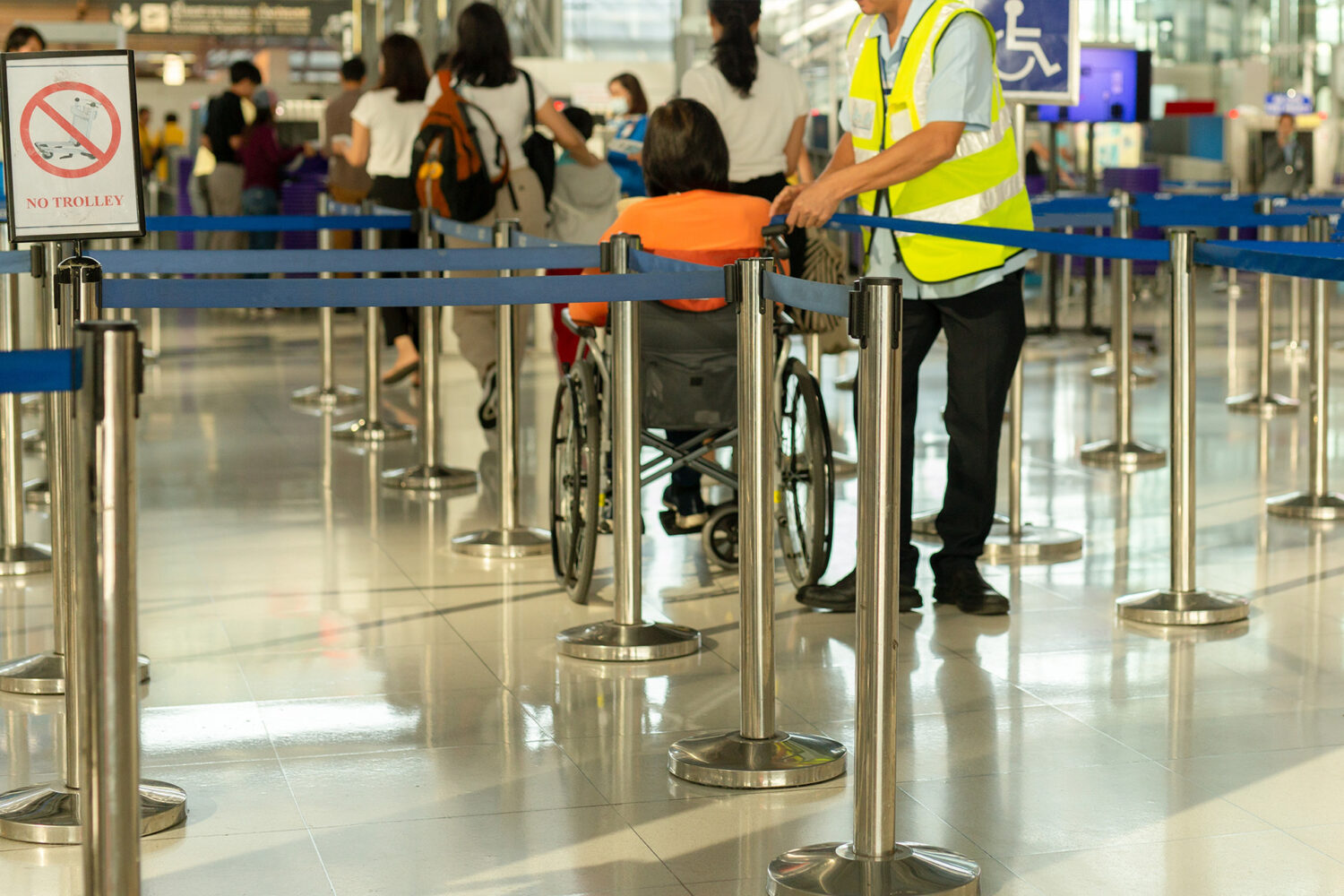
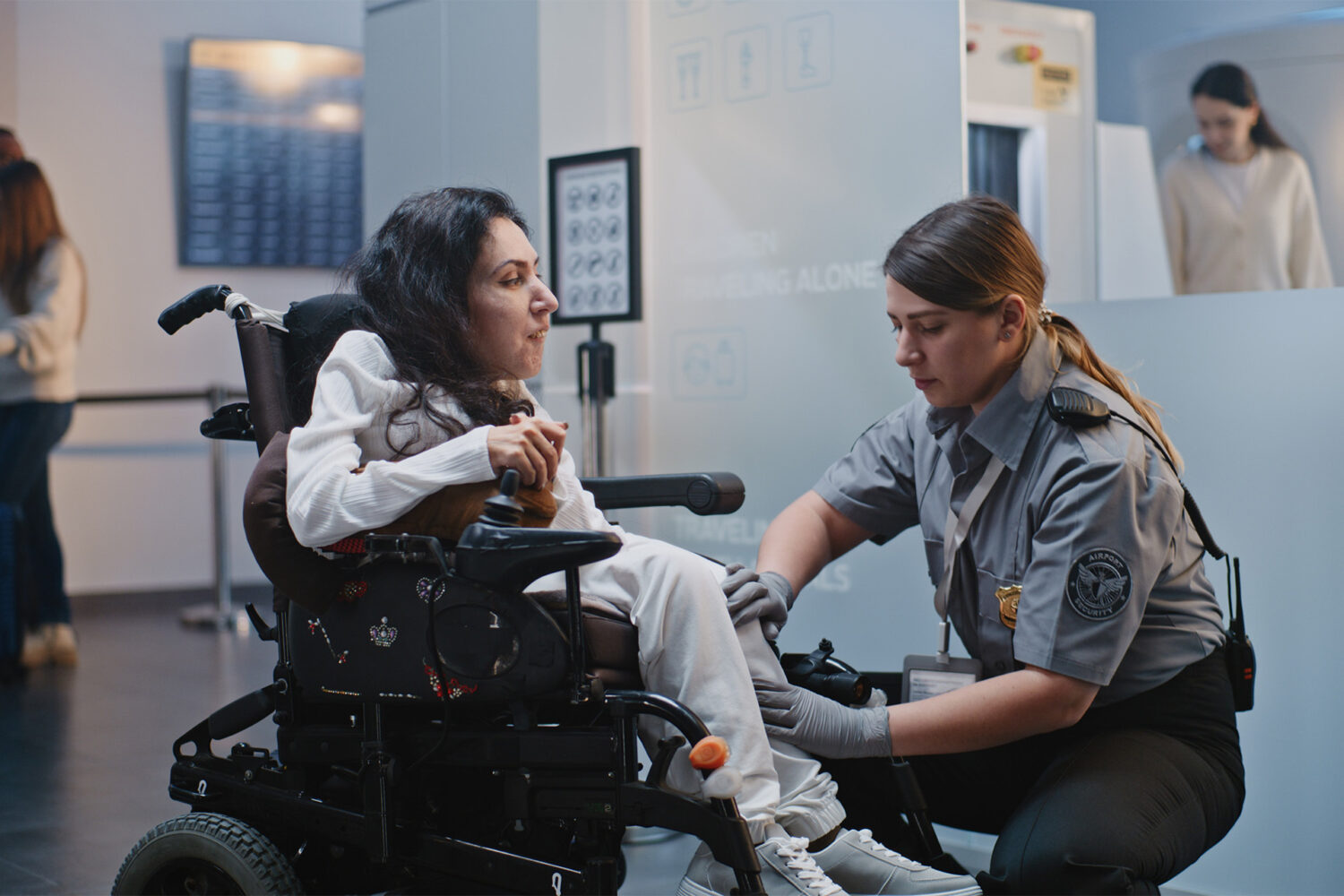
For many travelers, airport security is the most stressful part of the trip, so it helps to know your rights before you're standing at the belt. You don't have to leave your wheelchair or scooter to be screened. If you can't or would rather not walk through the metal detector or body scanner, you can request a pat-down instead and stay seated the whole time.
A few things TSA policy entitles you to:
A pat-down conducted by an officer of the same gender as you.
A private screening at any time, with a companion of your choosing present.
Keeping your medically necessary liquids, which are exempt from the standard 3.4-ounce limit. Just declare them to the officer before screening.
Staying with your medical devices and mobility aids. You should never be separated from a needed device, and you can ask to be immediately reunited with any aid that goes through the X-ray.
If you travel with a service dog, your dog goes through security screening with you, and it flies at no extra charge.
You're never required to explain your disability out loud in a crowded line. TSA offers a printable notification card you can hand to an officer to discreetly communicate that you have a disability or medical condition. If a screening isn't going well, you can ask for a supervisor or a Passenger Support Specialist. Calling TSA Cares at least 72 hours ahead arranges for a specialist to meet you at the checkpoint, but you can also request one on the spot.
Packing and Prep That Prevent Holiday Headaches
Preparation is where a good trip is really made. The DOT and disability travel advocates converge on a lot of the same advice, and most of it's simple.
Carry your essentials, never check them: Keep medication, syringes, and small assistive devices as carry-ons, since bags do occasionally get separated from passengers. Helpfully, these items don't count toward your carry-on limit.
Document your equipment: Take a photo of your wheelchair or mobility device before the flight to record its condition, and bring written instructions on how to disassemble, assemble, and stow it. Airline staff won't be familiar with your specific device, and clear instructions attached to the chair spare everyone guesswork at the gate.
Build in time and a sensory buffer: Arrive early to move through security lines, check-in, and boarding without rushing. Programs like TSA PreCheck and Global Entry can shorten lines, and TSA Cares offers personalized help through security when requested at least 72 hours ahead. For anyone who gets overstimulated in a loud terminal, a small kit with noise-canceling headphones, sunglasses, or familiar snacks goes a long way, and a growing number of larger airports now have quiet or sensory rooms to regroup in.
Think through seating and transfers: Many travelers request a bulkhead seat for the extra room, though bulkhead armrests are often fixed, so tell the airline if you need a movable one. If you transfer to an aisle chair to board, some flyers bring their own transfer sling to make the move smoother and safer.
Staying Comfortable and Informed at Your Destination
Once you land, the trip is only half over. New cities mean new sidewalks, transit systems, and buildings you've never navigated. A little research before you go smooths the arrival. Watching a walkthrough video of your hotel or transit hub, mapping accessible routes in advance, and confirming accommodations at your destination all reduce the number of surprises.
The disability travel community has built excellent free resources for exactly this. Sites like WheelchairTravel.org publish reviews of wheelchair-friendly destinations, and the Society for Accessible Travel and Hospitality offers advocacy and planning help. For non-visible disabilities, the Hidden Disabilities Sunflower program uses a discreet lanyard that signals to staff you may need extra patience or support, without requiring you to explain yourself repeatedly.
If Something Goes Wrong
Even with careful planning, things sometimes break down. If you believe an airline has violated your rights under the ACAA, you can ask to speak with a Complaints Resolution Official (CRO). Every airline is required to make one available to you at no cost, in person at the airport or by phone, whenever they're operating. The CRO is the airline's designated expert on disability accommodations, and looping them in early often resolves the issue on the spot.
A damaged wheelchair is one of the most common (and costly) issues. If your chair comes off the plane broken, act fast: inspect it the moment it's returned to you and document any damage at the arrival gate before you leave the airport. Photos taken on the spot, alongside the before-flight photo you took, make a much stronger record. Report it to the CRO right away. Airlines are responsible for repairing or replacing a device they've damaged, and while they sort that out, you can ask for a suitable loaner so you're not left without mobility.
If it isn't resolved, you have the right to file a complaint with the DOT. Every complaint filed also helps build the record that pushes airlines and regulators toward better access for everyone who flies after you.
Your Rights Are Worth Defending, at Home and Away
Knowing your rights while traveling with a disability is part of a larger habit worth building: expecting access and advocating when you don't get it.
That habit doesn't switch off when you land back in Montana. Ability Montana's advocacy program works on the systemic side of access, and our peer mentoring connects you with people who have navigated the same challenges you're facing. Whether you're planning a holiday flight or pushing for a more accessible community, you don't have to do it alone.
Safe travels this season, and know that the law (and a whole community) is on your side!