Common Accessibility Issues Worth Fixing in Your Business, From Parking Lots to Policies
Posted on: Sep 02, 2026
Key Takeaways
Common accessibility issues at businesses often begin outside the building, with parking, curb cuts, and entrance doors that create immediate barriers.
Once inside, narrow aisles, tall counters, and inadequate restrooms keep many patrons with disabilities from completing their visit.
Staff training and service animal policies are part of accessibility too, not just ramps and grab bars.
Free ADA self-assessment checklists and federal tax incentives make accessibility upgrades easier than many business owners expect.
Contact Ability Montana for free, confidential support with an accessibility assessment, or nominate a business already doing it right.
For people with disabilities, a trip to the bank, the grocery store, or a favorite local restaurant isn't just a quick errand. It's a series of small calculations:
Is there parking close enough? Will the door be too heavy to pull? Is the restroom usable? Will staff welcome a service dog or ask intrusive questions?
These are the everyday decisions behind disability inclusion. When businesses overlook common accessibility issues, the cost shows up in more than lost foot traffic. Inaccessible spaces signal to people with disabilities, including Veterans, older adults, and anyone navigating a new injury or chronic condition, that they don't fully belong.
Improving accessibility isn't complicated, and it isn't always expensive. Many of the most common issues can be fixed with small changes: a door handle swap, a rearranged display, or a short staff training. This guide walks through where to start and where to find help to make your business more accessible.
Need help with an accessibility assessment? Ability Montana provides free, confidential support to Montana businesses working through ADA compliance. Call 406-782-4834 or contact Ability Montana online to get started.
Why Common Accessibility Issues Are Worth Fixing
According to the U.S. Bureau of Labor Statistics, the employment-to-population ratio for people with disabilities sits at just over 22%, less than half the rate for those without disabilities.
Many of the systemic barriers behind that gap show up in physical spaces: inaccessible buildings, hiring processes that haven't been reviewed for usability, and businesses that have never thought through what a service dog encounter looks like from a customer's point of view.
The flip side is also true. According to Accenture's Disability Inclusion Imperative report, companies leading on disability inclusion see 1.6 times more revenue and 2.6 times more net income than peers, plus stronger productivity and employee engagement.
Accessibility isn't charity. It's good business. The Montana project Good Access Is Good Business, a partnership led by Ability Montana, exists to help local businesses get there.
Common Accessibility Issues at the Entrance
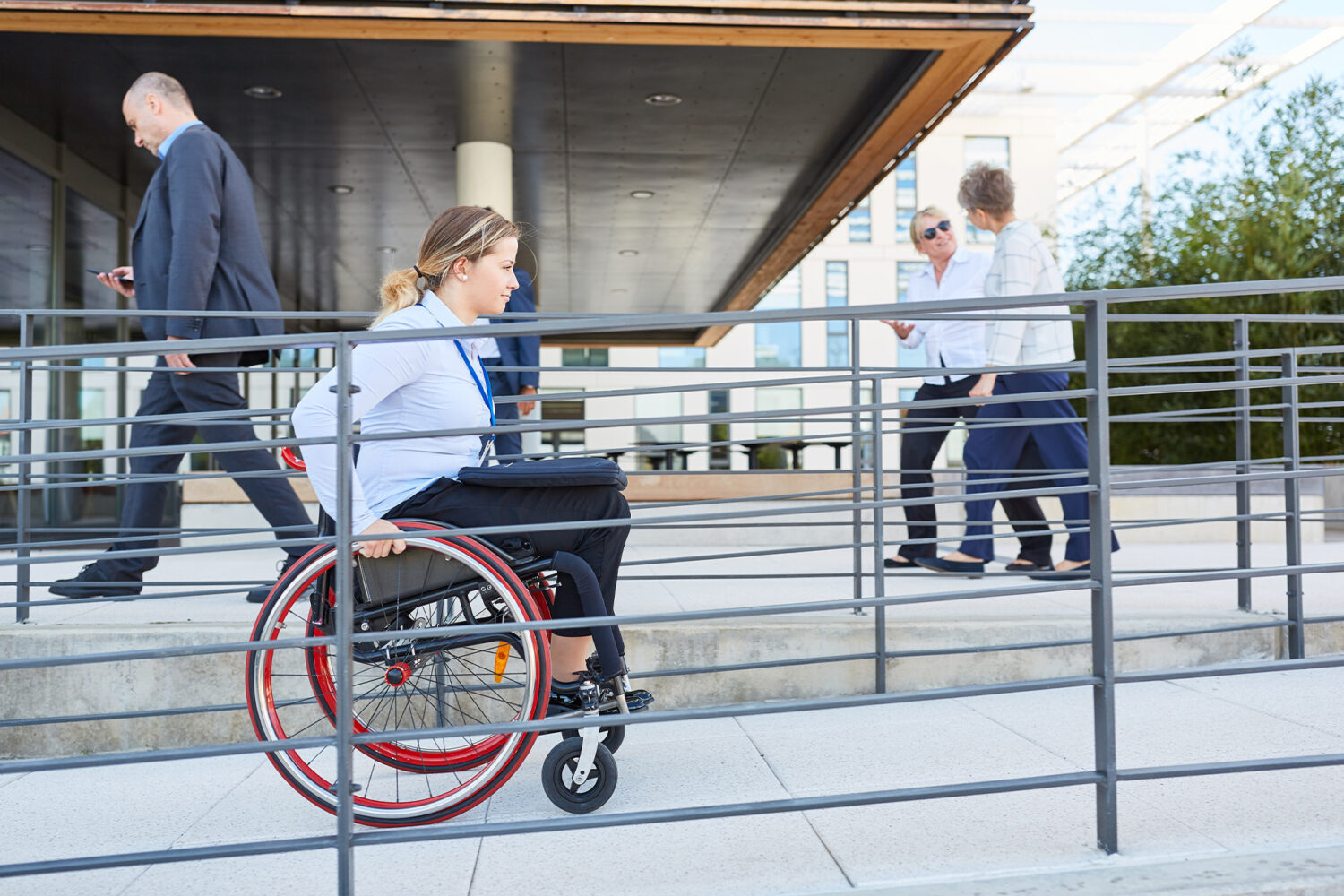
Most accessibility audits start in the parking lot because that's where most accessibility experiences begin. Summit Independent Living's accessibility self-assessment and the Good Access Is Good Business guidelines consistently flag the same issues:
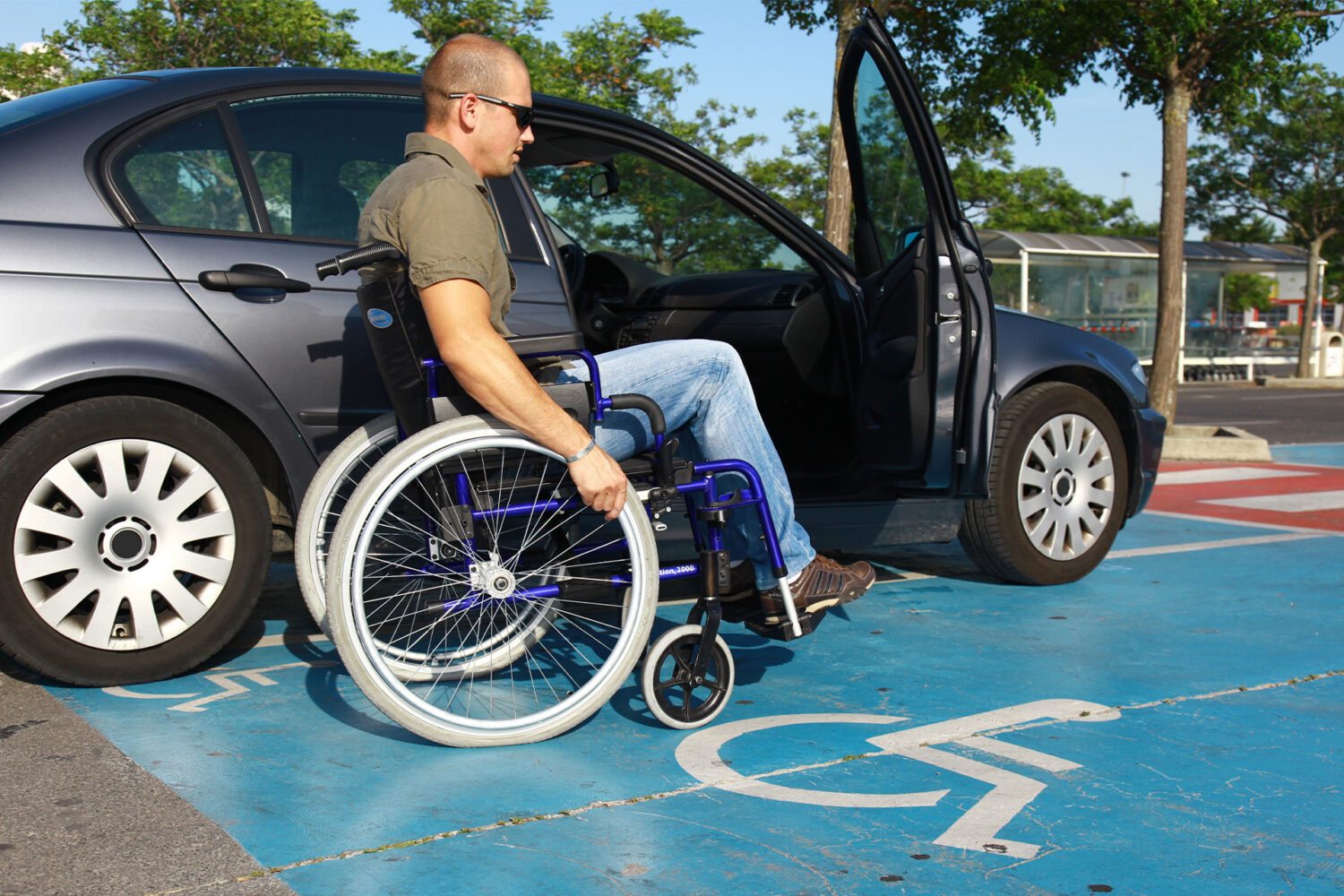
Parking: Accessible spaces should be located nearest the entrance, clearly marked, and connected to a curb cut.
Doors: Main entrances should have an automatic opener or, at minimum, lever-style handles that can be operated with one hand. No grasping, pinching, or twisting required.
Door frames: Doorways should be at least 32 inches wide to accommodate wheelchairs and other mobility devices.
Ramps: Stairway entrances need a ramp at least 36 inches wide with a maximum slope of 1:12.
Signage: If the main entrance isn't accessible, a clear sign should direct patrons to the accessible one.
In Montana, winter creates an extra layer of access concerns. Sidewalks, ramps, curb cuts, and access aisles need to stay clear of snow and ice through the season. The same applies to seasonal clutter: planters, trash cans, and merchandise displays that drift into walkways block access for wheelchair users and anyone with a visual impairment or mobility limitation.
Common Accessibility Issues Inside the Building
Once inside, the next set of barriers usually involves space, reach, and clear paths:
Aisles and doorways: A minimum of 36 inches wide is required so wheelchairs, walkers, scooters, and service dogs can move through freely.
Counters and registers: These should be no higher than 38 inches off the ground so patrons can be seen and served.
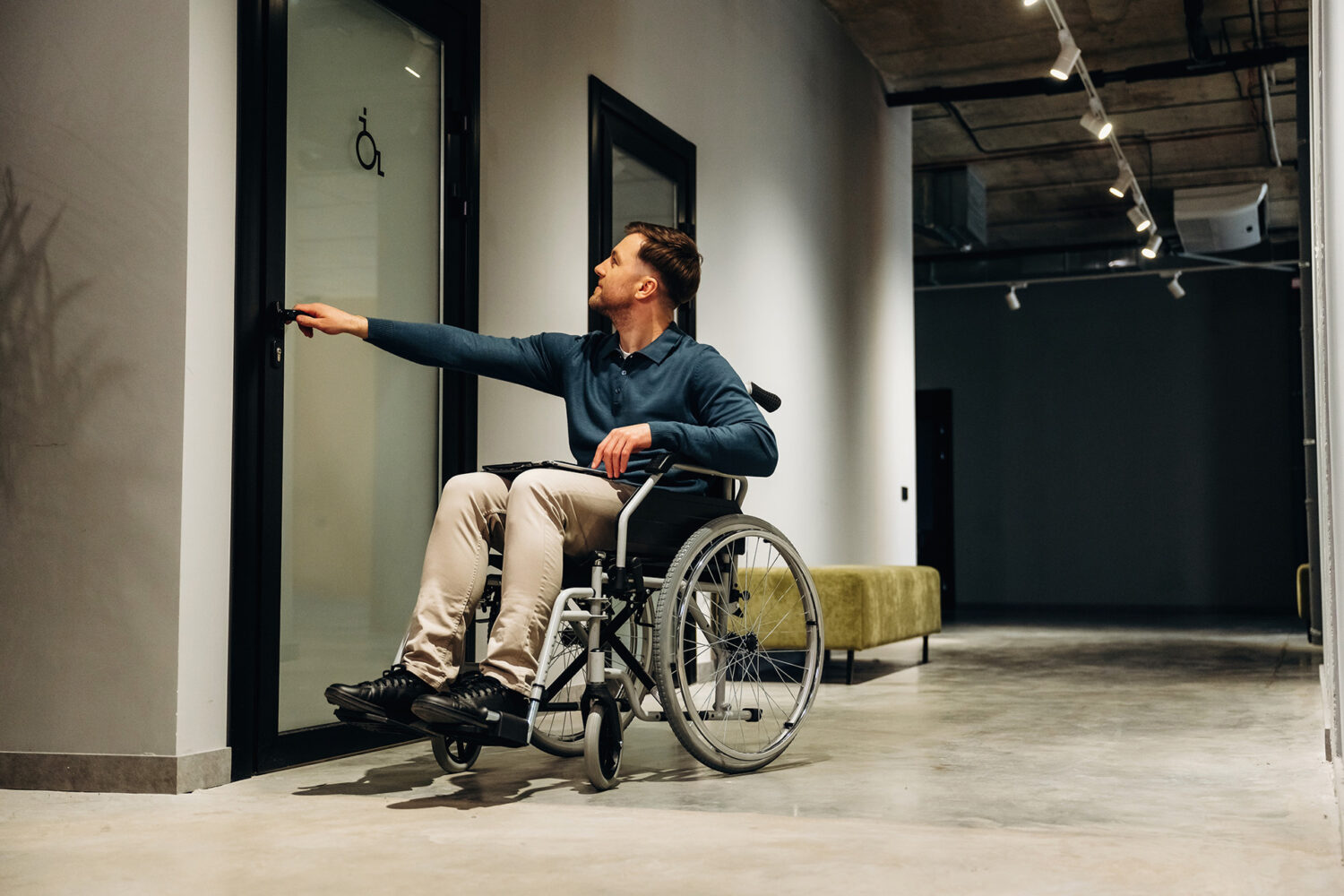
Restrooms: Buildings need accessible stalls with enough room to maneuver a wheelchair or scooter, grab bars at the back and side of the toilet, roll-under sinks, and towel or hand dryers placed within reach.
Indoor accessibility tends to slip over time, especially in busy retail or service environments. Seasonal displays, holiday decorations, and rearranged inventory can quietly narrow aisles below the 36-inch minimum. A monthly walkthrough, ideally with someone who uses a wheelchair or other mobility device, catches these issues before customers do.
Service Animal Access Is an Accessibility Issue, Too
Physical space is only one side of the conversation. Staff attitudes and policies shape the experience just as much, and service animal access is one of the most common areas where Montana businesses still fall short.
Under the Americans with Disabilities Act, service animals are permitted in nearly all public accommodations. Montana's SB 300, passed in 2023, also strengthened protections by clarifying penalties for misrepresenting a pet as a service animal. Yet many handlers still report being questioned, denied entry, or made to feel unwelcome.
Staff training should cover the two questions businesses are legally allowed to ask:
Is this a service animal required because of a disability?
What work or task has the dog been trained to perform?
That's it. Businesses can’t legally demand documentation or request the dog to demonstrate its task. They can’t ask questions about the handler's diagnosis. A short training with employees can prevent awkward encounters and ensure customers are treated fairly.
Did you know? Service dogs aren’t required to wear a vest. Under the ADA, a service animal's legitimacy is based entirely on its training to perform specific tasks for a person with a disability, not on its gear. |
Free Resources and Tax Incentives for Addressing Common Accessibility Issues
Cost is one of the most common reasons businesses delay improvements, and it's also one of the easiest to address. Federal tax incentives, including the Disabled Access Credit and the Architectural Barrier Removal Deduction, can offset many of the expenses tied to accessibility upgrades.
Self-assessment tools are free and widely available:
The ADA Checklist for Existing Facilities is the most comprehensive starting point.
Summit Independent Living offers a shorter self-assessment tailored for small businesses.
Good Access Is Good Business breaks down the six core technical accessibility guidelines for Montana businesses.
Physical access is only one piece of the picture. If your business has a website, online ordering system, or mobile app, check our digital accessibility guide.
Ability Montana's advocacy program also works directly with businesses, building owners, and community partners to identify and remove common accessibility issues across the state.
Recognize the Montana Businesses Getting It Right
Plenty of Montana businesses already treat accessibility as part of how they do good work. Highlighting them shifts the conversation from compliance to leadership and gives other business owners a clear example to follow!
Whether you're a business owner ready to make changes, a community member who wants to recognize one, or a person navigating these spaces every day, the work of building a more accessible Montana is shared. The barriers are well-documented. The fixes are within reach.
Know a business in Montana with great accessibility? Nominate them here through Good Access Is Good Business.